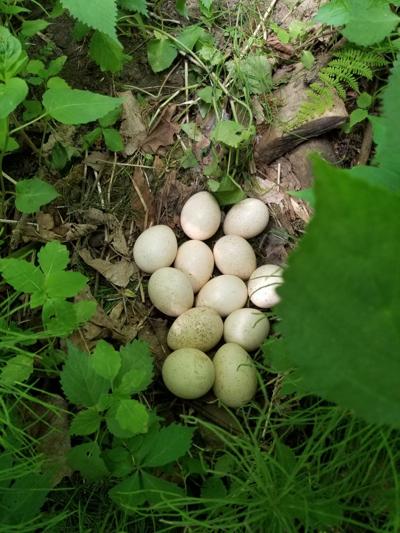
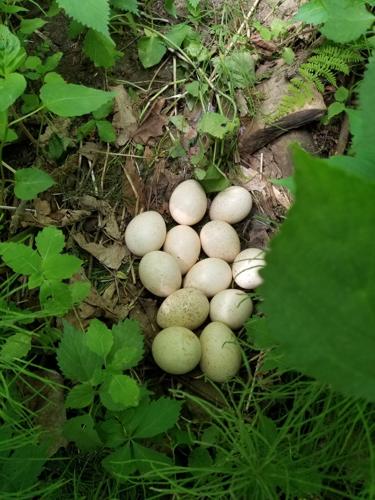
Wild turkeys hide their eggs in tall grass or mixed undergrowth. Unfortunately, they often choose tall grass portions of pastures that may fall under the blade of a tractor mower before they're hatched and done, so land managers are asked to take a careful walk through of any area they plan to mow looking for nests. A hen seen hanging about in such an area very likely has a nest there, so potential mowers are asked to be especially watchful for such there.
Wild turkeys hide their eggs in tall grass or mixed undergrowth. Unfortunately, they often choose tall grass portions of pastures that may fall under the blade of a tractor mower before they're hatched and done, so land managers are asked to take a careful walk through of any area they plan to mow looking for nests. A hen seen hanging about in such an area very likely has a nest there, so potential mowers are asked to be especially watchful for such there.
Turkey hens on the nest right now are incubating birds that will form the bulk of the chase in the spring of 2028, so anything that can be done to help or not hinder them is an investment in the future of all.
Hens across the southeast should be nesting now through early June. This is the time when the birds are most vulnerable, and the flocks’ future along with them. Cold, wet springs are especially difficult for nesting success. The current spring so far hasn’t been especially bad. So far, the outlook for current broods should be good as far as good goes, but average nesting success is abysmally poor at best, so every bit helps.