

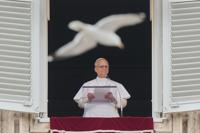
A seagull flies past as Pope Leo XIV recites the Regina Coeli noon prayer from the window of his studio overlooking St. Peter's Square, at the Vatican, Sunday, May 10, 2026. (AP Photo/Andrew Medichini)
A seagull flies past as Pope Leo XIV recites the Regina Coeli noon prayer from the window of his studio overlooking St. Peter's Square, at the Vatican, Sunday, May 10, 2026. (AP Photo/Andrew Medichini)

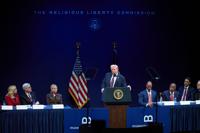
President Donald Trump's Religious Liberty Commission is preparing to make recommendations after more than a year of hearings. Commissioners have spoken about their wish lists for what they want to see in the report. They reflect the perspectives of the commission's largely conservative evangelical and Catholic membership. One idea is to increase avenues for religious expression in public schools and other public settings. Another is making public money more available to religious organizations. And there's a push for allowing for religious-based exemptions from regulations and classroom lessons. The commission's chair has repeatedly said "there is no separation of church and state.”

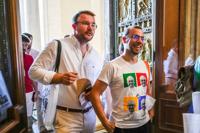
The Vatican is sending new signals about how it intends to minister to LGBTQ+ Catholics in the Pope Leo XIV era. There are signs of openness and limitations. LGBTQ+ Catholic advocates cheered this week when a Vatican working group released a report featuring the testimony of two gay, married Catholics who spoke of their sexuality and faith. Additionally, Leo made clear during a recent airborne news conference that he believed the church’s teachings on social justice, equality and freedom were far more important than its teaching on sexual morality. At that same news conference, though, Leo also made clear he will go no further than Francis on the contentious matter of same-sex blessings.
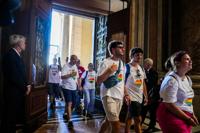
FILE - Members of the LGBTQ+ Catholics and their families who joined a Holy Year pilgrimage to Rome walk through the Holy Door of St. Peter's Basilica at the Vatican, Saturday, Sept. 6, 2025. (AP Photo/Andrew Medichini, File)

FILE - Members of the LGBTQ+ Catholics and their families who joined a Holy Year pilgrimage to Rome walk through the Holy Door of St. Peter's Basilica at the Vatican, Saturday, Sept. 6, 2025. (AP Photo/Andrew Medichini, File)

In his first year as pontiff, Pope Leo XIV has sought a pastoral role focused on unity, community and calm leadership in a polarized church an…
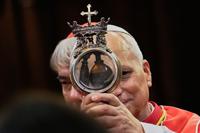
Pope Leo XIV holds up a ceremonial ampoule that Catholic tradition says contains the blood of Naples' patron saint, Saint Gennaro, whose dried blood is believed by the faithful to liquefy during recurring ceremonies in the city, in Naples, Friday, May 8, 2026, during a one-day pastoral visit to Pompeii and Naples. (AP Photo/Gregorio Borgia)

In his first year as pontiff, Pope Leo XIV seems driven not by the dramatic gesture or tensions that often fueled the papacy of his predecessor, but by a calm, persistent zeal to preach the Gospel and emphasize community and harmony. His verbal feud with U.S. President Donald Trump over the Iran war may have complicated his effort, but he insists his essential role is that of a pastor accompanying his flock. After Pope Francis’ sometimes divisive 12-year papacy, Leo has brought a calming balm to the Vatican and the church at large. He seems intent on healing divisions, even as new threats of schism emerge.

Pope Leo XIV has prayed for political leaders to end "fratricidal hatred" in the world. He spent Friday, the anniversary of his election, in Pompeii, marking a feast day important to him. Leo traveled to the city near Naples to celebrate the May 8 feast of Our Lady of Pompeii. The sanctuary there is a significant site for Catholic pilgrims. In his homily, Leo entrusted his pontificate to the Virgin Mary and prayed for peace. He emphasized the need for mercy and enlightenment for leaders. Leo's visit to Pompeii is part of a series of trips across Italy.

While Pope Francis opened his pontificate with a flurry of reforms and appointments to shake things up, Pope Leo XIV has taken his time to find his footing. The U.S.-born Leo seems to be taking a longer view of his pontificate. As he marks the first anniversary of his election as pope, Leo already has made some changes to policies carried out by Francis. But he also still has several key personnel appointments looming. And he must navigate through difficult ground involving the consecration of some traditionalist bishops, as well as dealing with proposed reforms in the German Catholic Church.